The Ultimate On-Page SEO Checklist & Ranking Blueprint for 2026
A comprehensive checklist covering title tags, URL structure, internal link architecture, schema markup, and Core Web Vitals.
Direct Definition & Core Concept
Popular Keyword Searches & Topics for On-Page SEO Checklist
Click any search topic below to immediately run real-time autocomplete predictions, monthly search volume, and SERP competition in the On-Page SEO Checklist:
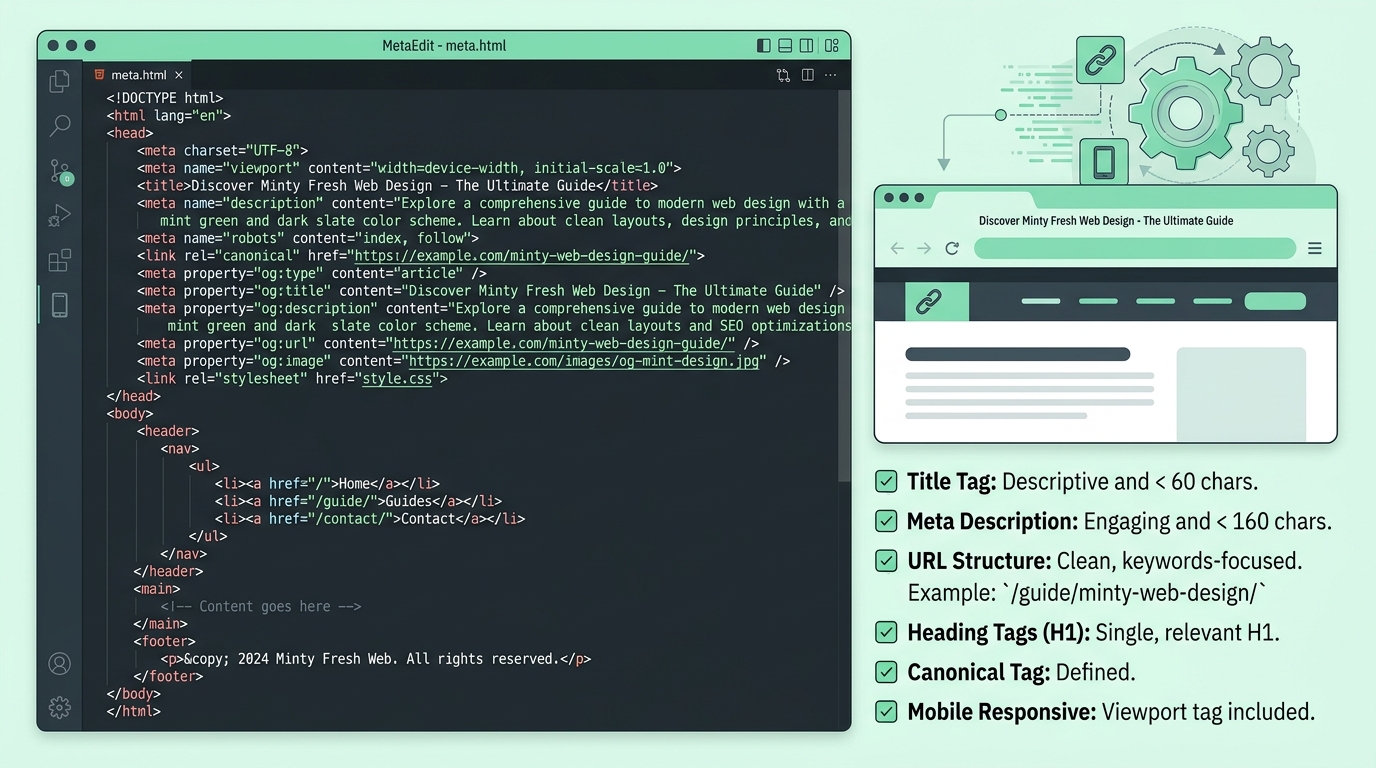
On-Page Metadata Code Implementation Examples
Inspect correct HTML tag formatting for clean on-page technical optimization:
| Element | Recommended Benchmark | Key Rule |
|---|---|---|
| Title Tag | 50–60 characters | Include primary keyword near the beginning |
| Meta Description | 120–155 characters | Summarize content and include a natural CTA |
| URL Slug | 3–5 words, lowercase, hyphens | Remove numbers, dates, and stop words |
| Headings | Single H1, semantic H2 and H3 | Never skip heading levels (e.g. H1 to H3) |
Step-by-Step Method
Follow this practical workflow to achieve measurable organic results in minutes.
Optimize the URL Slug
Keep your URL short, lowercase with hyphens. Include your target keyword as close to the domain root as possible.
Craft Click-Worthy Title Tag
Keep title tags between 50 and 60 characters so they display cleanly on Google desktop and mobile SERPs without truncation.
Enforce Strict Heading Hierarchy
Ensure there is only one H1 tag per page, followed by logical H2 and H3 subheadings without skipped heading levels.
Add Structured Data & Alt Attributes
Add descriptive image alt tags and relevant Schema.org JSON-LD structured data.
Common Mistakes
Avoid these high-friction errors that derail indexation and organic rank momentum.
Core Ranking Factors & Metrics
Search engines weight these specific attributes when computing SERP visibility.
Detailed Strategy & Technical Nuance
Why On-Page SEO Matters More Than Ever
Search engines have become increasingly adept at understanding context and user satisfaction. Clean on-page SEO ensures that when Googlebot inspects your page, the core subject matter is immediately obvious.
A properly structured page with clear headings, fast loading assets, and descriptive alt text improves both search crawler comprehension and real user conversion.
Website Audit Tool
Audit any URL to verify title tags, meta descriptions, canonical URLs, and heading hierarchies.
Why use this: Audit on-page title tags, meta descriptions, and heading structures.
Frequently Asked Questions
Direct answers to common search questions regarding On-Page SEO Checklist and On-Page SEO.
Should the keyword be in the first paragraph?
Yes. Placing your primary keyword within the first 100 words confirms immediate topic relevance for search engines and visitors.