How to Use Google Trends to Catch Breakout Search Queries Early
Spot emerging consumer interests, seasonal search spikes, and rising geographic demand curves weeks before competitors publish.
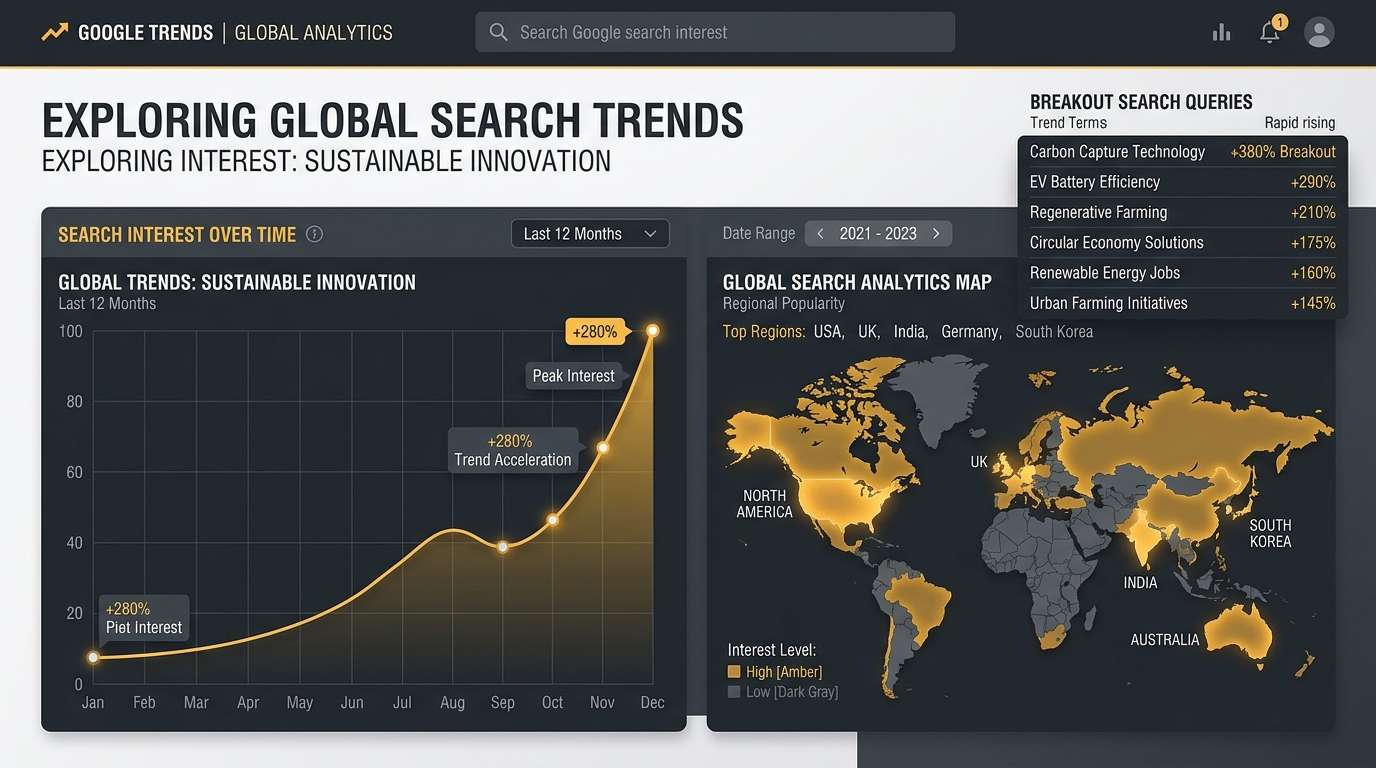
Direct Definition & Core Concept
Popular Keyword Searches & Topics for Google Trends Tool
Click any search topic below to immediately run real-time autocomplete predictions, monthly search volume, and SERP competition in the Google Trends Tool:
Predictable Seasonal Search Curves
Understanding annual seasonality allows you to publish before consumer interest peaks:
| Topic / Niche | Peak Month | Recommended Publish Window |
|---|---|---|
| Home Fitness Equipment | January | November (6 weeks prior) |
| Back to School Supplies | August | June (8 weeks prior) |
| Black Friday Deals | November | September (8 weeks prior) |
Step-by-Step Method
Follow this practical workflow to achieve measurable organic results in minutes.
Select Google Trends Mode
Switch to Google Trends in the tool platform selector.
Search Topic or Product Category
Enter your industry topic (e.g. "pickleball gear", "cold plunge tub", "ai automation").
Compare 12-Month vs 5-Year Curves
Identify whether interest is temporary hype or a sustainable, long-term growing trend.
Target Rising & Breakout Queries
Identify terms labeled "Breakout" to capture first-mover search advantage.
Common Mistakes
Avoid these high-friction errors that derail indexation and organic rank momentum.
Core Ranking Factors & Metrics
Search engines weight these specific attributes when computing SERP visibility.
Detailed Strategy & Technical Nuance
Relative Interest vs. Absolute Search Volume
Google Trends indexes interest on a 0 to 100 scale representing search popularity relative to the peak point on the chart.
This provides an early warning indicator that static monthly search volume tools miss, allowing you to publish ahead of demand waves.
Google Trends Tool
Inspect live search interest trends and breakout search terms.
Why use this: Spot rising search queries and inspect real-time trend interest curves.
Frequently Asked Questions
Direct answers to common search questions regarding Google Trends Tool and Keyword Research.
What does a "Breakout" query mean on Google Trends?
It indicates that search volume grew by more than 5,000% over the selected timeframe.